
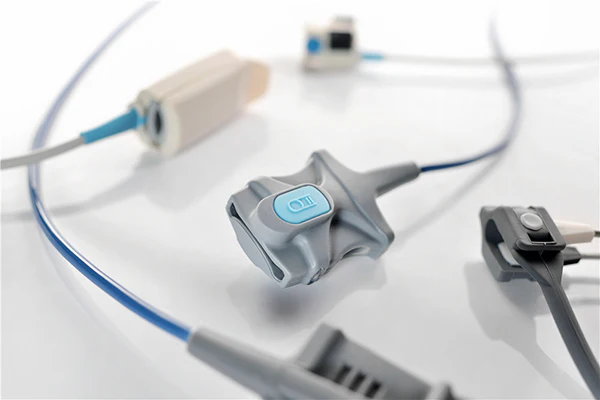
Quality agreements are central when an OEM reusable SpO2 sensor is supplied to medical device manufacturers or healthcare providers. These documents define responsibilities for design, manufacturing, testing, labeling, validation, and post-market support. When regulatory bodies audit suppliers and original equipment manufacturers, they assess whether these agreements ensure patient safety, consistent performance, and regulatory compliance for devices such as Nellcor reusable SpO2 sensors that interface with patient monitors.
Scope and Content of Quality Agreements
A robust quality agreement describes roles and responsibilities across the product lifecycle. It specifies accepted materials, biocompatibility requirements, cleaning and reprocessing instructions, and environmental limits. The agreement should reference applicable standards and certifications, for example, ISO 13485 for quality management and ISO 10993 for biocompatibility. For Nellcor reusable SpO2 sensors, traceability for connectors, cable assemblies, and sensor housings must be explicit so each component can be traced back to approved suppliers.
What Auditors Look For
During an audit, regulators examine whether the quality agreement is current, signed by both parties, and actively enforced. Auditors check that manufacturing records match agreement terms, that incoming material controls and supplier qualifications align with specified requirements, and that production processes, including calibration and environmental controls, are documented. They also verify that clinical performance claims and intended use are supported by test reports and validation data for OEM reusable SpO2 sensor designs.
Supply Chain and Traceability Evidence
Regulatory teams focus on traceability across the supply chain. Auditors review lot records, change control logs, and supplier audit reports to confirm that any changes to components, such as LED specifications or cable shielding, were evaluated and approved per the agreement. For Nellcor reusable SpO2 sensors, compatibility claims with specific monitor models must be backed by test matrices and interface cable verification.
Post-market Surveillance and Complaint Handling
A clear clause on complaint handling and adverse event reporting is required. Auditors assess whether the OEM and supplier share responsibilities for investigation, corrective action, and field safety notices. Records of returned sensors, root cause analyses, and corrective and preventive actions provide evidence that the agreement supports timely risk mitigation.
Conclusion
Regulatory audits of quality agreements for OEM reusable SpO2 sensors evaluate whether contractual commitments translate into documented, controlled practices that protect patients and maintain device performance. Suppliers such as Unimed, which provide reusable SpO2 sensors compatible with multiple platforms including Nellcor, must ensure their quality agreements, traceability systems, and post-market processes meet regulatory expectations and are readily demonstrable during inspection.