
In modern manufacturing, precision and consistency are fundamental to achieving reliable product performance. For engineers, product developers, and production planners, understanding the principles behind precision plastics tooling is essential for ensuring that plastic components meet strict functional and dimensional requirements. Precision plastics tooling serves as the foundation for producing high-quality parts, especially in industries where accuracy and repeatability are critical. By examining both the design and manufacturing aspects of precision tooling solutions, organizations can better align their development processes with production efficiency and long-term scalability.
Design Considerations in Precision Plastics Tooling
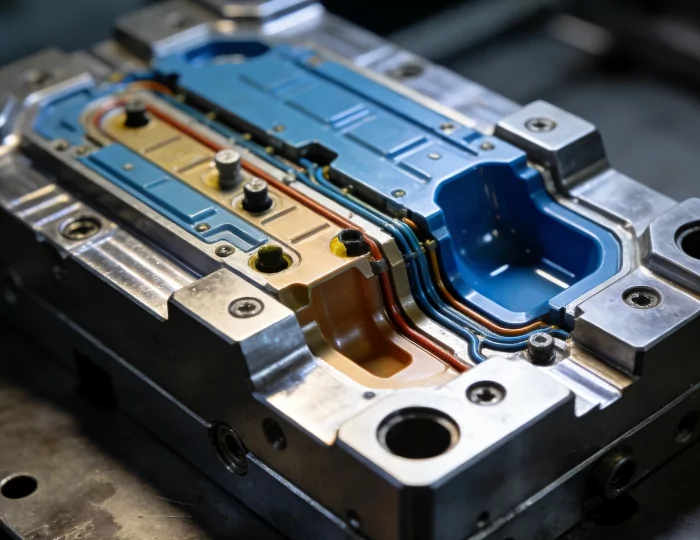
The design phase plays a decisive role in determining the success of precision plastics tooling. A well-structured mold design ensures that the final product meets performance requirements while maintaining manufacturability. Engineers must carefully consider factors such as part geometry, wall thickness, gating systems, and cooling channel layout. These elements directly influence material flow, cooling efficiency, and dimensional stability during injection molding.
Precision tooling solutions often incorporate advanced simulation tools to predict how molten plastic behaves within the mold. This allows engineers to identify potential defects such as warpage, sink marks, or incomplete filling before manufacturing begins. By addressing these issues early, precision plastics tooling reduces the need for costly modifications later in the production process. Design-for-manufacturability analysis further strengthens this approach by ensuring that each component can be produced efficiently without compromising quality.
Material selection is another critical aspect of tooling design. Different materials—such as tool steel, stainless steel, or aluminum—offer varying levels of durability, thermal conductivity, and machining efficiency. Precision tooling solutions must balance these factors based on production volume, part complexity, and performance requirements. For example, aluminum molds are often used for rapid prototyping due to their shorter lead times, while hardened steel molds provide durability for long production runs. Livepoint Tooling integrates these considerations into its design process, ensuring that precision plastics tooling aligns with both technical and operational objectives.
Manufacturing Processes and Quality Control
Once the design is finalized, the manufacturing phase translates engineering concepts into physical tooling. Precision plastics tooling requires advanced machining techniques, including CNC milling, electrical discharge machining (EDM), and high-speed cutting, to achieve tight tolerances and smooth surface finishes. These processes ensure that molds can produce parts with consistent accuracy across multiple production cycles.
Quality control is an integral part of precision tooling solutions. Each stage of manufacturing is carefully monitored to ensure that tooling meets specified standards. Dimensional inspections, material verification, and functional testing are commonly used to validate mold performance. Precision plastics tooling providers must maintain strict quality assurance protocols to ensure that each mold performs reliably under production conditions.
Efficiency is also enhanced through specialized tooling configurations. Multi-cavity molds allow multiple identical parts to be produced in a single cycle, improving productivity. Insert molds and two-shot molds enable the integration of different materials or components within a single process, expanding design possibilities. Precision tooling solutions that incorporate these techniques can significantly improve production efficiency while maintaining high levels of accuracy. Livepoint Tooling has developed extensive expertise in these areas, offering precision plastics tooling that combines advanced manufacturing processes with consistent quality control.
Achieving Consistent Results Through Integrated Tooling Strategies
Precision plastics tooling is not limited to individual processes; it represents an integrated approach that connects design, material selection, and manufacturing execution. When precision tooling solutions are applied effectively, they create a stable foundation for producing high-quality plastic components across various applications.
Working with experienced providers such as Livepoint Tooling ensures that each stage of tooling development is aligned with production requirements. Their combination of engineering expertise and manufacturing capability supports consistent outcomes, from initial design to final production. A comprehensive understanding of precision plastics tooling allows manufacturers to improve both product quality and operational efficiency. By integrating advanced design methods with