
Flash is a common defect in seal and O-ring manufacturing. Thin excess rubber can form along the mold parting line when material enters gaps outside the intended cavity. For manufacturers producing injection molded rubber parts, excessive flash means additional trimming, inspection work, and potential dimensional problems.
Effective flash control starts before demolding. Injection pressure, rubber flow behavior, mold condition, and clamping stability all influence the finished sealing edge. Understanding how these factors interact helps manufacturers reduce unnecessary finishing work while maintaining consistent production quality.
Why Flash Forms Around Sealing Rings
Rubber must fill narrow mold cavities under controlled pressure. When mold surfaces do not close correctly, material may enter small gaps and create unwanted edges. Excessive injection pressure can also contribute to flash when the mold cannot adequately contain the compound.
Material characteristics influence this behavior. Natural rubber, nitrile rubber, and fluoro rubber differ in viscosity and curing response. Processing conditions should therefore reflect the selected compound and sealing geometry.
Mold maintenance is equally important. Worn parting surfaces, damaged inserts, trapped residue, or unsuitable vent dimensions can create local flash problems. Technicians should inspect these areas before making repeated machine adjustments.
Injection Parameters Need Coordinated Adjustment
Injection pressure and shot volume directly influence cavity filling. Excessive material delivery can contribute to flash, while insufficient filling may produce incomplete sealing profiles. Finding a suitable balance requires controlled production trials.
Temperature settings also affect material flow. Changes in compound temperature or mold temperature can alter viscosity and curing behavior. Operators should monitor these conditions alongside injection speed and pressure.
When evaluating a rubber seal molding machine, buyers should examine how accurately the equipment controls injection movement, pressure, and material delivery. Process records can help identify whether defects originate from unstable settings or mechanical problems within the mold.
Consistent Material Delivery Supports Stable Filling
Shot-to-shot consistency matters when producing small sealing components. Changes in material residence time or injection quantity may affect filling behavior, especially when processing compounds sensitive to premature vulcanization.
FIFO injection provides one approach to material management. The first material entering the injection system is discharged first, helping limit excessive residence time. This arrangement can reduce variations associated with material remaining too long inside the injection unit.
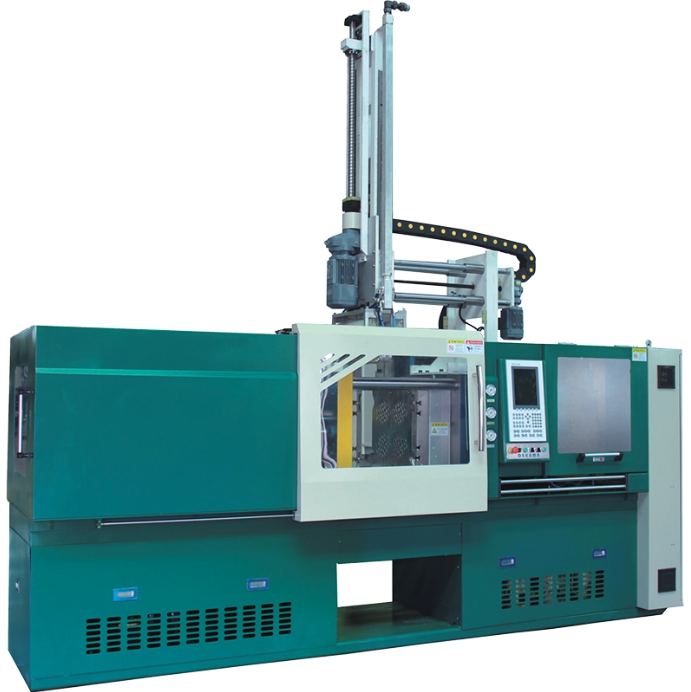
The RH Series Rubber Injection Molding Machine for Sealing Rings from Dekuma combines FIFO technology with an integrated injection unit. Designed for natural rubber, NBR, and fluoro rubber components, the machine also uses an ultra-high-pressure injection system to support cavity filling.
These features help manufacturers manage material delivery. However, flash control still requires suitable mold sealing, injection parameters, and clamping conditions. Higher injection pressure alone does not prevent excess rubber from escaping the cavity.
Cold-Runner Systems Help Manage Rubber Waste
Cold-runner technology addresses another production concern: material waste. In conventional runner arrangements, rubber may cure inside the runners and require removal after molding.
Cold-runner systems maintain suitable conditions within the runner channels, allowing uncured rubber to remain available for subsequent molding cycles. This can reduce runner waste and help manage material distribution across cavities.
The RH Series incorporates cold-runner technology alongside its FIFO injection design. For sealing-ring production, these functions can support repeatable material delivery while reducing unnecessary rubber consumption.
However, lower runner waste should not be confused with eliminating flash. Parting-line leakage still depends on mold condition, compound behavior, injection settings, and clamping performance.
Automated Cleaning Supports Repeated Production
Mold cleanliness becomes important during continuous sealing-ring production. Rubber residue, flash fragments, or other material left near mold surfaces can interfere with later molding cycles.
Automatic brushes can assist with product pickup and mold cleaning. By reducing some repetitive manual tasks, this arrangement may help operators maintain a more consistent production sequence.
The RH Series from Dekuma includes automatic brushes and a servo-driven hydraulic pump system. The pump adjusts hydraulic flow and pressure according to operating demand, while the brushes support mold-area cleaning and product handling.
For manufacturers producing injection molded rubber parts, these functions can complement established inspection and maintenance procedures. Operators still need to monitor sealing edges and check whether cleaning equipment is performing correctly.
Flash Reduction Requires Process Validation
Successful flash control should be measured through actual production results. Manufacturers can record flash location, trimming time, rejected parts, injection settings, and mold maintenance findings across several trial cycles.
When comparing equipment, buyers should consider whether the injection system, mold arrangement, runner configuration, and automation functions match their sealing-ring specifications. Testing under representative operating conditions helps reveal problems that machine specifications alone cannot identify.
For companies evaluating a rubber seal molding machine, practical preparation should include rubber compound details, part drawings, mold requirements, target output, and acceptable flash limits. These details provide a useful starting point for technical discussions and molding trials.
Reducing flash ultimately depends on controlling the complete molding process. Stable injection, suitable mold conditions, material management, and regular inspection work together to limit unnecessary trimming and maintain sealing-ring quality.