
Maintenance requirements differ because lecture hall chairs do not all age in the same way. Fixed auditorium-style seats, chairs with tablets, flip-up seats, and training-table combinations each place stress on different parts. For universities, public training centers, healthcare schools, and overseas agents, lecture hall seating should be specified with service routines in mind. Leadcom Seating positions lecture hall seating as combining comfort and adaptability, and its education solutions include built-in workspaces and device-ready armrests. These features increase usefulness, but they also deserve maintenance planning. Different models may share the same room, but hinges, tablets, upholstery, and fixing points can age differently.
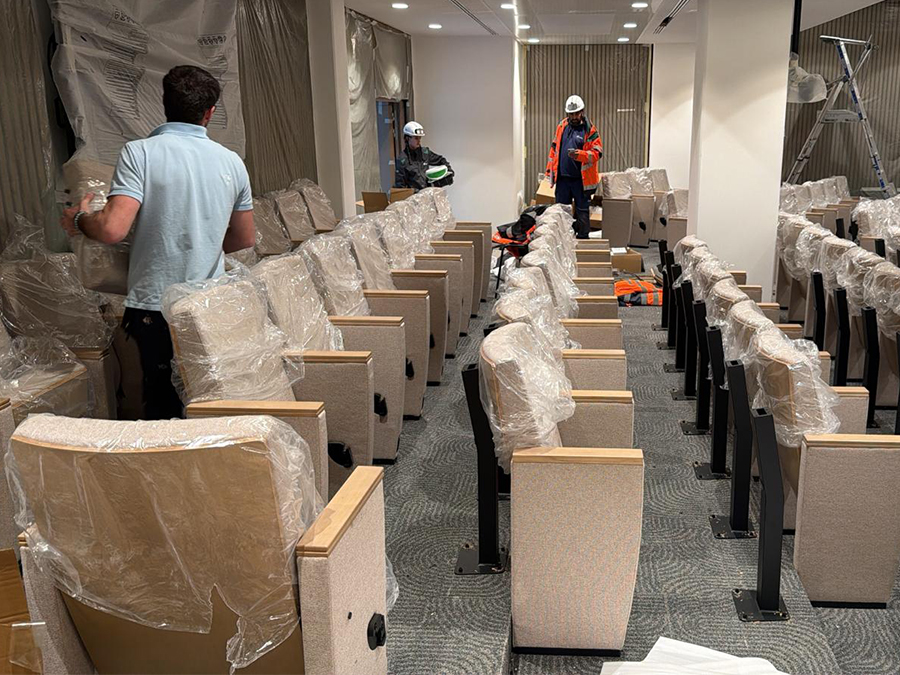
Different Chairs, Different Service Needs
A fixed lecture chair may require attention to floor anchors, upholstery wear, seat return mechanisms, and back support. Chairs with tablets add hinges, writing surfaces, and possible replacement parts. Flip-top training tables introduce another layer of moving hardware. The available engineering resources include lecture theatre seating and dynamic workspace products, which shows that lecture hall chairs can vary widely by learning format. The project team should help facility teams compare how each model will be cleaned, inspected, repaired, and kept available during busy academic periods. A maintenance matrix can help compare each chair type by expected wear points, inspection frequency, cleaning time, and the availability of replacement components.
Planning Maintenance Into the Specification
Material selection affects maintenance frequency. Plastic backs may be compact and easier to clean, upholstered options may improve comfort, and writing surfaces must withstand pressure from books and devices. Large classrooms may need robust finishes because even minor wear appears quickly when repeated across many rows. Auditorium products with different backs and upholstery options provide useful comparisons for education projects. Overseas agents can strengthen proposals by explaining these practical differences rather than presenting every seat as equally suitable. This makes the maintenance plan part of the purchase decision instead of a problem discovered only after the first year.
Keeping Lecture Spaces Available
A good specification reduces avoidable downtime. Facility managers should ask about spare parts, repair access, warranty response, and whether maintenance can be done without removing multiple adjacent seats. Leadcom Seating’s education and project support positioning gives lecture hall chairs a more complete context for long-term use. A Well-planned lecture hall seating choice is not only comfortable on installation day; it remains serviceable through examinations, daily lectures, public training sessions, and years of cleaning cycles. That approach keeps lecture hall seating and lecture hall chairs serviceable, reducing the risk that classrooms are taken offline for avoidable repairs.